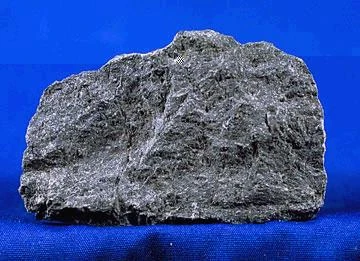
Flint
A cryptocrystalline quartz used for tools, fire, and firearms.

Flint, also known as flintstone, is a form of quartz (SiO₂) that is sedimentary and cryptocrystalline. It is a specific type of chert found within chalk or marly limestone. For a long time, people used flint to create stone tools and to spark fires. This material typically appears as nodules or masses inside sedimentary rocks like chalk and limestone. Inside a nodule, flint is often dark grey, black, green, white, or brown, with a glossy or waxy look. The outer layer, which is oxidized and thin, usually has a different color—commonly white and rough. These nodules are frequently spotted along streams and beaches. Because flint fractures into pieces with very sharp edges, it worked well for cutting tools such as knife blades and scrapers. The practice of making stone tools from flint goes back at least 2.6 million years, and its extreme durability allows scientists to accurately date its use across that span. Flint is a key material that defines the Stone Age. During the Stone Age, getting flint was so vital for survival that people traveled or traded long distances to obtain it. Grime's Graves was a major source that was traded throughout Europe. In Ohio, Flint Ridge provided another important source; Native Americans operated hundreds of quarries there. This "Ohio Flint" was traded across the eastern United States and has been discovered as far west as the Rocky Mountains and south to the Gulf of Mexico. When struck against steel, flint produces enough sparks to start a fire with proper tinder or to ignite gunpowder in weapons like the flintlock mechanism. Though newer methods (such as the percussion cap) or materials (like ferrocerium) have replaced it for these uses, "flint" remains a generic term for any fire starter. The exact way flint forms is not fully understood, but it is believed to result from chemical changes in sediment during diagenesis. One idea is that a gelatinous material fills cavities in the sediment—like holes made by crustaceans or mollusks—and then becomes silicified, which would explain flint nodules' complex shapes. The dissolved silica might come from the spicules of silicious sponges (demosponges). Some flint, like that from England's south coast and its French counterpart across the Channel, contains trapped fossilized marine flora. Pieces of coral and vegetation have been preserved inside flint, similar to insects and plants
- composition
- Silicon dioxide (SiO2)
- category
- Sedimentary cryptocrystalline quartz (chert variety)
- color
- Dark grey, black, green, white, brown, reddish brown, off-white grey; also red, green, pink, blue, grey (Ohio flint)
- luster
- Glassy or waxy
- hardness
- Extreme durability (implied by use over millions of years)
- primary_uses
- Stone tools, fire starting, flintlock firearms, building material
- notable_sources
- Grime's Graves (England), Flint Ridge (Ohio, USA), Spiennes (Belgium), Rügen (Germany), Krzemionki (Poland)
Lore & Background
Flint forms as nodules and masses in sedimentary rocks like chalk and limestone, often found along streams and beaches. Its exact mode of formation is not yet clear, but it is thought to occur as a result of chemical changes in sediment during diagenesis. One hypothesis suggests that a gelatinous material fills cavities in sediment, such as holes made by crustaceans or molluscs, which become silicified. The source of dissolved silica may be the spicules of silicious sponges. Certain flint, such as that from the south coast of England, contains trapped fossilised marine flora, with pieces of coral and vegetation preserved inside, similar to insects in amber.
Reader's Guide
Flint's significance spans over three million years of human history, as its use to make stone tools dates back more than three million years, and its extreme durability has made it possible to accurately date its use over this time. It is one of the primary materials used to define the Stone Age. During the Stone Age, access to flint was so important for survival that people would travel or trade long distances to obtain it. Grime's Graves was an important source traded across Europe, while Flint Ridge in Ohio was another major source, with Native Americans extracting flint from hundreds of quarries and trading it across the eastern United States, as far west as the Rocky Mountains and south around the Gulf of Mexico. Flint also played a key role in fire-starting and weaponry, notably in the flintlock firing mechanism, and its name became a generic term for a fire starter, even after being superseded by ferrocerium. As a building material, flint has been used from antiquity up to the present day, especially in parts of southern England.
Did You Know?
- Flint is the official gemstone of Ohio state.
- When struck against steel, flint produces sparks by shaving off a particle of steel that exposes iron, which reacts with oxygen.
- Puzzling giant flint formations known as paramoudra and flint circles are found around Europe, especially on beaches in Norfolk, England.
Geological Origins & Natural Appearance
Flint is a cryptocrystalline variety of quartz belonging to the chert family, typically found embedded in chalk or marly limestone. It appears chiefly as nodules or irregular masses, with interiors ranging from deep charcoal and black to green, white, or earthy brown, often showing a glassy or waxy luster. A thin oxidized skin, usually pale and rough-textured, encases each nodule, and the stones are frequently found washed along streams and coastal beaches. The exact process behind flint's formation is still debated, but current thinking points to chemical changes during diagenesis. One prominent hypothesis suggests a gelatinous substance filled cavities left by ancient crustaceans or molluscs, then slowly silicified into hard stone, with dissolved silica possibly sourced from the spicules of siliceous sponges. Some nodules even preserve fragments of fossilized coral and marine vegetation in a way reminiscent of insects trapped in amber, a detail visible in thin slices. Across Europe, vast flint fields occur in Jurassic and Cretaceous beds, while enigmatic giant formations known as paramoudra and flint circles dot the Norfolk coastline at Beeston Bump and West Runton.
Stone Age Toolmaking & the Art of Knapping
Because flint fractures into thin, razor-sharp splinters called flakes or blades when struck by a harder object, it became one of the defining materials of the Stone Age. Shaping flint into cutting edges—knife blades, scrapers, and other implements—dates back more than three million years, and the stone's extreme durability has let researchers trace its use across that span with remarkable precision. The shaping process, known as knapping, was practiced as far back as the Paleolithic but grew more widespread during the Neolithic, particularly among the Michelsberg and Funnelbeaker cultures. Across Europe, premier toolmaking flint has been recovered from sites in Belgium, the English Channel chalks, the Paris Basin, Jutland, Rügen, Grimes Graves, the Balkans, the Moldavian Plateau, Poland, and the Swiss Jura. This renders the material more homogeneous and yields cleaner, sharper edges, though exceeding the threshold risks the flint exploding.
Trade, Survival & Cultural Significance
During the Stone Age, access to reliable flint was so critical to survival that communities would travel great distances or establish trade networks simply to obtain the stone. Grimes Graves in England served as a major quarry whose products were exchanged across the continent. On another continent, Ohio's Flint Ridge became equally vital. Native American peoples extracted the stone from hundreds of quarries along the ridge, and the resulting "Ohio Flint" was traded throughout the eastern United States. Fragments have been identified as far west as the Rocky Mountains and as far south as the shores of the Gulf of Mexico, testifying to the reach of these exchange networks. Ohio flint is a product of immense geological time: limey debris settled on the floors of inland Paleozoic seas hundreds of millions of years ago, hardened into limestone, and was later infused with silica. The resulting stone occurs in a remarkable palette—red, green, pink, blue, white, and grey—with color variations attributed to minute iron compound impurities. Its beauty and historical importance are recognized officially, as Ohio flint is the state's designated gemstone.
Fire, Flintlocks & an Enduring Name
When a sharp flint edge is struck against steel, it shaves off a tiny particle of iron that reacts with atmospheric oxygen, producing a spark hot enough to ignite the right tinder. Before steel became widely available, people paired flint with pyrite in a similar, though slower, sparking process. These techniques remain popular today among woodcraft practitioners, bushcraft enthusiasts, and traditional fire-starting communities. Flint's most consequential mechanical application came with the flintlock firing mechanism, in which a spring-loaded piece of flint was drawn across a steel frizzen to spark a pan of gunpowder and ignite a firearm. The system dominated weapons design before being superseded by the percussion cap. Even after ferrocerium rods and other modern ignition methods rendered the original technique obsolete, the word "flint" survived as a generic label for any fire-starting implement. This linguistic persistence underscores how deeply the stone's properties were woven into human culture. A material knappable into a blade three million years ago, tradeable across continents, and still capable of sparking a flame against steel, flint left its name embedded in everyday language long after the specific technologies that gave it purpose had faded.
Frequently Asked Questions
Who is Flint?
Flint is a dense, microcrystalline variety of quartz (silicon dioxide) that occurs as nodules embedded within chalk and marly limestone deposits. It is classified as a specific subtype of chert within the sedimentary rock family.
What are Flint's powers/abilities?
Flint fractures into consistently sharp edges, making it ideal for crafting cutting tools, arrowheads, and other implements. It also throws bright sparks when struck against steel, a property that powered the ignition mechanism in flintlock firearms.
What does Flint look like?
The interior of a flint nodule typically displays a dark grey, black, green, white, or brown body with a glassy-to-waxy sheen. A thin, rough-textured outer cortex in a contrasting pale tone forms where the surface has oxidized over time.
Where does Flint come from?
Flint forms as rounded nodules or irregular masses trapped inside sedimentary host rocks, most commonly chalk and marly limestone. These nodules are frequently exposed along coastal cliffs and riverbanks where erosion strips away the surrounding matrix.
Why is Flint important?
For thousands of years, flint served as a go-to material for sharp-edged tools, fire-making, and later as the sparking element in flintlock weapons. Its extreme durability and reliable conchoidal fracture made it one of the most dependable natural materials available to pre-industrial societies.
More in Rocks And Minerals 25-29
Elsewhere in the Rocks And Minerals universe
Spotted an error? Know more?
This is a living reference — every entry is fact-audited, and reader corrections feed straight into our audit queue. Suggest an edit · See this site's audit record