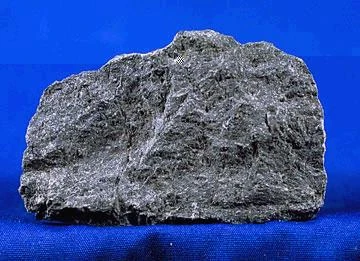
Halite
Mineral form of sodium chloride, used for salt and de-icing.

Halite, commonly known as rock salt, is the mineral form of sodium chloride (NaCl). It forms isometric crystals and is typically colorless or white, but may also appear in various colors due to impurities or structural abnormalities. Halite occurs dominantly in sedimentary rocks from the evaporation of seawater or salty lake water, forming vast beds that can be hundreds of meters thick and underlie broad areas.
- field
- Mineralogy
- known_for
- Rock salt, de-icing, food preservation
- crystal_system
- Isometric
- chemical_formula
- NaCl
- common_colors
- Colorless, white, light blue, dark blue, purple, pink, red, orange, yellow, gray
Lore & Background
Halite dominantly occurs within sedimentary rocks where it has formed from the evaporation of seawater or salty lake water. Vast beds of sedimentary evaporite minerals, including halite, can result from the drying up of enclosed lakes and restricted seas. Such salt beds may be hundreds of meters thick and underlie broad areas. Halite occurs at the surface today in playas in regions where evaporation exceeds precipitation such as in the salt flats of Badwater Basin in Death Valley National Park. In the United States and Canada, extensive underground beds extend from the Appalachian Basin of western New York through parts of Ontario and under much of the Michigan Basin. Other deposits are in Ohio, Kansas, New Mexico, Nova Scotia and Saskatchewan. Deposits can also be found near Dasol, Pangasinan, Philippines. The Khewra salt mine is a massive deposit of halite near Islamabad, Pakistan.
Reader's Guide
Halite is significant as the primary source of common salt, essential for human consumption, food preservation, and cooking. Its use in de-icing relies on freezing-point depression, where brine lowers the freezing point of water, melting ice on roads and walkways. Historically, salt was used as currency and in the practice of salting the earth. Halite also forms salt domes, which are associated with petroleum deposits, and salt glaciers in arid Iran. The mineral's various colors, due to impurities, are valued in some cultures for specific dishes. The world's largest underground salt mine, the Sifto Salt Mine, produces over 7 million tons of rock salt per year under Lake Huron in Ontario, Canada. Halite's role in agriculture, cleaning, and as a less lethal deterrent in shotgun shells further demonstrates its broad utility.
Did You Know?
- Halite forms isometric crystals and can be light blue, dark blue, purple, pink, red, orange, yellow, or gray due to impurities.
- The world's largest underground salt mine, the Sifto Salt Mine, is located half a kilometre under Lake Huron in Ontario, Canada.
- Salt domes are common along the Gulf coasts of Texas and Louisiana and are often associated with petroleum deposits.
- Halite crystals called hopper crystals have edges that grow faster than centers, creating skeleton-like cubes.
Frequently Asked Questions
Who is Halite?
Halite is the crystalline mineral form of sodium chloride, the same compound people know as ordinary table salt. It belongs to the isometric crystal system and is one of the most widespread sedimentary minerals on Earth.
What are Halite's main roles and uses?
In everyday life, Halite is the mineral source behind de-icing roads in cold climates and preserving food through salting. It also feeds major chemical industries that need a steady supply of sodium and chlorine compounds.
How does Halite form in nature?
Halite crystallizes when vast quantities of seawater or briny lake water evaporate, leaving behind thick layers of salt that can stack hundreds of meters deep. These deposits typically underlie broad sedimentary basins and represent ancient, dried-up water bodies.
What does Halite look like?
Pure Halite crystals are colorless or white and grow in classic cubic shapes, but trace impurities can shift the hue to light blue, dark blue, pink, red, orange, yellow, purple, or gray. Fans often spot the geometric, glassy cubes in hand specimens or geological cross-sections.
Why is Halite considered important in mineralogy?
Because it is the dominant mineral source of edible salt and a key raw material for industrial chemistry, Halite has been extracted by humans for thousands of years. Its enormous sedimentary deposits make it one of the most economically significant non-metallic minerals worldwide.
More in Rocks And Minerals 1-24
Elsewhere in the Rocks And Minerals universe
Spotted an error? Know more?
This is a living reference — every entry is fact-audited, and reader corrections feed straight into our audit queue. Suggest an edit · See this site's audit record