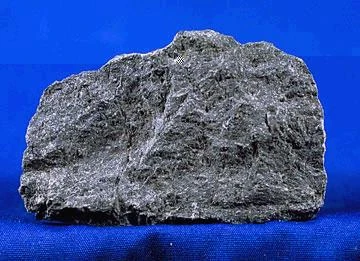
Granulite
High-grade metamorphic rocks representing deep continental crust.

Granulites are a type of high-grade metamorphic rock formed under high temperatures and moderate pressures. They are medium- to coarse-grained, with a granoblastic texture and a structure that ranges from gneissose to massive. Their main components are feldspars, often alongside quartz and anhydrous ferromagnesian minerals. Geologists find them especially valuable because many granulites are samples of the deep continental crust. Some of these rocks underwent decompression from great depths to shallower crustal levels while still hot; others cooled while staying deep underground. The specific minerals in a granulite depend on its original parent rock and the temperature and pressure conditions during metamorphism. A common type found in high-grade continental metamorphic rocks contains pyroxene, plagioclase feldspar, and accessory garnet, oxides, and sometimes amphiboles. Both clinopyroxene and orthopyroxene can be present; in fact, the coexistence of these two pyroxenes in a metabasite—a metamorphosed basalt—defines the granulite facies. Visually, a granulite often stands out with abundant small pink or red pyralspite garnets set in a granular, holocrystalline matrix. Concentrations of garnets, micas, or amphiboles may line up in a pattern similar to the banding seen in gneiss or migmatite. Granulites form at crustal depths, typically during regional metamorphism under high thermal gradients—greater than 30 °C per kilometer. In continental crust, biotite can break down at high temperatures to produce orthopyroxene, potassium feldspar, and water, yielding a granulite. Other minerals that may form under dehydration melting conditions include sapphirine, spinel, sillimanite, and osumilite. Such extreme heat at crustal depths can only come from upwelling of the asthenospheric mantle in continental rifting settings, which drives regional metamorphism at those high thermal gradients. The granulite facies is defined by a lower temperature bound
- type
- Metamorphic rock
- pressure_range
- 2–15 kb
- typical_thermal_gradient
- Greater than 30 °C/km
- common_minerals
- Pyroxene, plagioclase feldspar, garnet, oxides, amphiboles
- facies
- Granulite facies
Lore & Background
Granulites form at crustal depths, typically during regional metamorphism at high thermal gradients of greater than 30 °C/km. In continental crustal rocks, biotite may break down at high temperatures to form orthopyroxene + potassium feldspar + water, producing a granulite. Other possible minerals formed at dehydration melting conditions include sapphirine, spinel, sillimanite, and osumilite. Such high temperatures at crustal depths can be delivered by several tectonic settings, including upwelling of the asthenospheric mantle in continental rifting, magmatic arcs, back-arc basins, or regions of crustal thickening with magmatic underplating, all of which can drive regional metamorphism at high thermal gradients.
Reader's Guide
The most common mineral assemblage of granulite facies consists of antiperthitic plagioclase, alkali feldspar containing up to 50% albite and Al2O3-rich pyroxenes. Transition between amphibolite and granulite facies is defined by reaction isograds: amphibole → pyroxene + H2O, and biotite → K-feldspar + garnet + orthopyroxene + H2O. Hornblende granulite subfacies is a transitional coexistence region of anhydrous and hydrated ferromagnesian minerals, so the above-mentioned isograds mark the boundary with pyroxene granulite subfacies – facies with completely anhydrous mineral assemblages. The term granulite has also been used historically in different ways: the French school applied it to a granite with both muscovite and biotite, while German petrologists used it for a fine-grained metamorphic rock consisting mainly of quartz and feldspar with small garnets. The Saxon granulite district in Germany is considered a typical region, though the rocks there are mingled with granites, gneisses, gabbros, and other types. Along with typical acid granulites, dark-colored basic granulites (trap granulites) occur, containing pyroxene, plagioclase, and garnet.
Did You Know?
- Granulites are of particular interest because many represent samples of the deep continental crust.
- The coexistence of clino- and orthopyroxene in a metabasite defines the granulite facies.
- The term granulite has been used historically for two distinct rock types: a high-grade metamorphic rock and a fine-grained igneous rock (granophyre or microgranite).
Mineral Composition & Visual Identity
Granulites are medium to coarse-grained high-grade metamorphic rocks displaying a granoblastic texture and a gneissose to massive structure. Their principal constituents are feldspars, often accompanied by quartz and anhydrous ferromagnesian minerals. A typical continental granulite carries pyroxene, plagioclase feldspar, accessory garnet, oxides, and occasionally amphiboles. Both clinopyroxene and orthopyroxene can occur together, and their coexistence within a metabasite is in fact what defines the granulite facies itself. Visually, a granulite can be strikingly distinctive: abundant small pink or red pyralspite garnets dot a granular holocrystalline matrix, while concentrations of garnets, micas, or amphiboles may align along linear patterns that mimic gneiss or migmatite banding. In thin section, the 1911 Britannica describes minerals appearing as small rounded grains forming a closely fitted mosaic, with individual crystals rarely exhibiting perfect form. Quartz and feldspar predominate, mica shows up as flat scales, and the larger garnets stand out as visible pink spots on broken surfaces, typically enclosing tiny grains of other minerals.
Formation Under Extreme Thermal Regimes
Granulites form at significant crustal depths, typically during regional metamorphism where thermal gradients exceed thirty degrees Celsius per kilometer. In continental crustal rocks, biotite can break down at high temperatures to yield orthopyroxene, potassium feldspar, and water, producing a granulite in the process. Under dehydration melting conditions, additional phases such as sapphirine, spinel, sillimanite, and osumilite may appear. Certain assemblages, like sapphirine paired with quartz, signal temperatures above nine hundred degrees Celsius. Some granulites represent the residual rocks left behind after partial melting extracted varying amounts of felsic melt, and in extreme cases all constituent minerals are anhydrous, making the rock appear as though it survived ultrahigh-temperature conditions without actually melting. Temperatures of nine hundred to one thousand one hundred fifty degrees Celsius are required to generate granulite-facies mineral assemblages. Such extreme heat at depth can only be delivered by upwelling of the asthenospheric mantle in continental rifting settings, which drives the regional metamorphism at those extraordinary thermal gradients.
The Granulite Facies and Its Boundaries
The granulite facies is formally bounded below by a temperature of seven hundred plus or minus fifty degrees Celsius and spans a pressure range of two to fifteen kilobars. Its most common mineral assemblage includes antiperthitic plagioclase, alkali feldspar containing up to fifty percent albite, and aluminum-rich pyroxenes. The transition from the amphibolite facies into the granulite facies is marked by specific reaction isograds: the breakdown of amphibole into pyroxene plus water, and the decomposition of biotite into potassium feldspar, garnet, orthopyroxene, and water. Within the granulite facies itself, a transitional zone called the hornblende granulite subfacies exists, where anhydrous and hydrated ferromagnesian minerals coexist. Beyond this zone lies the pyroxene granulite subfacies, characterized by completely anhydrous mineral assemblages. The exact minerals present in any given granulite depend on the parent rock and the specific temperature-pressure path it experienced, meaning no two granulites are identical in composition.
Historical Terminology and the Saxon Type Region
The term granulite derives from the Latin granulum, meaning a little grain, and its usage has shifted considerably over the centuries. The 1911 Encyclopædia Britannica records that French petrographers once applied the name to a granite containing both muscovite and biotite micas, a usage that was never widely accepted and is now obsolete. German petrologists, by contrast, defined granulite as a more or less banded, fine-grained metamorphic rock of quartz and feldspar in very small irregular crystals, often with minute pale-red garnets, a sense adopted by English and American geologists. The Britannica also notes that granulites are closely allied to gneisses, sharing nearly the same minerals but differing in finer grain size, less perfect foliation, and a greater frequency of garnet. The granulite district of Saxony, in the area of Rosswein and Penig, Germany, was regarded as the typical region for this rock group, and the mineral controversies surrounding it were considered important to theoretical geology.
Frequently Asked Questions
Who is Granulite?
Granulite is a high-grade metamorphic rock that forms when pre-existing rocks are heated to very high temperatures under moderate pressures deep in the continental crust. It shows a medium- to coarse-grained granoblastic texture and can appear either gneissose or massive in structure.
What are Granulite's powers/role?
Its mineral cast typically includes pyroxene, plagioclase feldspar, garnet, oxides, and amphiboles, all arranged in a notably dry (anhydrous) ferromagnesian assemblage. It crystallizes under pressures of roughly 2–15 kilobars with thermal gradients above 30 °C per kilometer, placing it squarely in the granulite facies.
How does Granulite's story end?
Some granulite samples were carried upward from great depths while still hot, decompressing into shallower crustal levels. Others simply cooled in place deep underground, locking in their high-temperature mineralogy without ever seeing daylight.
Why is Granulite important to the ensemble?
Geologists treat granulites as rare, tangible samples of the deep continental crust, giving direct physical evidence of conditions far below the upper few kilometers. Without them, our picture of the lower crust would rely almost entirely on indirect seismic or experimental data.
What's Granulite's backstory/origin?
Granulite 'enters the story' when igneous or sedimentary protoliths are buried deep enough to experience granulite-facies metamorphism, where temperatures are high enough to expel structurally bound water from minerals. The result is a feldspar-rich, dry rock that records the thermal history of its host terrane.
More in Rocks And Minerals 1-24
Elsewhere in the Rocks And Minerals universe
Spotted an error? Know more?
This is a living reference — every entry is fact-audited, and reader corrections feed straight into our audit queue. Suggest an edit · See this site's audit record