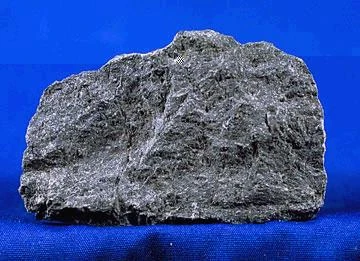
Granodiorite
Coarse-grained intrusive rock intermediate between granite and diorite.

Granodiorite (pronounced GRAN-oh-DY-ə-ryte or GRAN-ə-) is a coarse-grained, intrusive igneous rock that closely resembles granite but contains more plagioclase feldspar than orthoclase feldspar. It is the plutonic counterpart of the volcanic rock dacite, and its composition ranges from felsic to intermediate. The average composition of the upper continental crust is widely considered to be granodioritic. The rock forms when silica-rich magma cools slowly beneath the Earth’s surface, typically in large bodies called batholiths or smaller stocks. It usually becomes visible only after uplift and erosion strip away the overlying rock. In terms of mineral content, granodiorite contains over 20% quartz by volume, and between 65% and 90% of its feldspar is plagioclase. If plagioclase were even more dominant, the rock would be classified as tonalite. The lighter-colored minerals include sodium- and calcium-rich plagioclase, potassium feldspar, quartz, and small amounts of muscovite mica. Darker minerals—such as amphiboles (often hornblende) and biotite—are more common in granodiorite than in granite, giving it a more pronounced two-toned or darker look. Mica may appear as well-formed hexagonal crystals, and hornblende can form needle-like crystals. Minor oxide minerals like magnetite, ilmenite, and ulvöspinel, along with some sulfides, may also be present. The name combines “granite” and “diorite,” as granodiorite sits between these two rock types. The “gran-” part comes from the Latin *grānum* for “grain,” while “-diorite” is from French, derived from Ancient Greek and referring to the contrasting colors of the rock’s grains. The term “banatite” is sometimes used informally for rocks ranging from granite to diorite—often granodiorite—that intruded during the Late Cretaceous in the Banat region of present-day Hungary and Serbia. In Australia, the term also describes a rock of intermediate composition between quartz diorite and quartz monzonite, associated with Gulaga / Mount Dromedary in New South Wales. Today, it is quarried for crushed stone used in road building, as well as for construction material, building facades, paving, and ornamental stone. Notable examples include Plymouth Rock, a glacial erratic boulder of granodiorite.
- type
- Igneous rock
- composition
- Felsic to intermediate
- quartz_by_volume
- Greater than 20%
- feldspar_plagioclase_percentage
- 65% to 90%
- notable_occurrences
- Sierra Nevada, United States; Mons Claudianus, Egypt; Newry, Ireland
Lore & Background
The name comes from two related rocks to which granodiorite is an intermediate: granite and diorite. The gran- root comes from the Latin grānum for 'grain', and the suffix -diorite derives from Ancient Greek, describing the distinct contrasting colors of the grains. Granodiorite is a plutonic igneous rock, formed by intrusion of silica-rich magma, which cools in batholiths or stocks below the Earth's surface. It is usually only exposed at the surface after uplift and erosion. The term banatite is sometimes used informally for various rocks ranging from granite to diorite, including granodiorite, particularly in the Banat region and in Australia. Granodiorite was quarried at Mons Claudianus in eastern Egypt from the 1st century AD to the mid-3rd century AD, with much of the stone transported to Rome for major projects. In Ireland, granodior
Reader's Guide
Granodiorite holds significance as a major component of the upper continental crust, matching its average composition. Its use in ancient Roman architecture, such as the portico columns of the Pantheon (each 12 metres tall by 1.5 metres in diameter) and the Rosetta Stone, demonstrates its historical importance as a durable and ornamental stone. The rock's intermediate composition between granite and diorite, defined by its plagioclase feldspar content and quartz volume, makes it a key reference in igneous petrology. The informal term 'banatite' reflects its variable nature across regions. Modern uses include crushed stone for road building, construction material, building facades, and paving. The uncertainty regarding the extent of Egyptian granodiorite masonry—whether it was ignored by successive dynasties or only heavily mined during Ptolemaic or Roman times—highlights gaps in archaeological knowledge. Overall, granodiorite bridges geological classification and human craftsmanship, from ancient stelae to contemporary infrastructure.
Did You Know?
- Granodiorite has a greater than 20% quartz by volume and between 65% and 90% of its feldspar is plagioclase.
- The term banatite is used informally for rocks ranging from granite to diorite, often granodiorite, in the Banat region and Australia.
- Plymouth Rock is a glacial erratic boulder of granodiorite.
- The Rosetta Stone is a stele made from granodiorite.
Mineral Composition & Classification
Granodiorite occupies a distinctive position among intrusive igneous rocks, sitting squarely between granite and diorite on the compositional spectrum. Classified as felsic to intermediate, it is the plutonic counterpart of the extrusive rock dacite. On the QAPF classification diagram, a rock earns the granodiorite label when quartz exceeds twenty percent by volume and between sixty-five and ninety percent of its feldspar content is plagioclase rather than orthoclase. Push the plagioclase proportion any higher and the rock reclassifies as tonalite. The mineral assemblage reflects this chemistry. Sodium- and calcium-rich plagioclase, potassium feldspar, and quartz form the lighter-colored framework, while muscovite mica adds to the pale tones. What sets granodiorite apart visually from granite is a noticeably higher abundance of dark minerals: amphiboles, frequently in the form of hornblende, and biotite. These dark phases give the rock its characteristic two-toned or overall darker look. Mica can appear as well-formed hexagonal crystals, and hornblende may present as slender needle-like inclusions. Trace oxide minerals such as magnetite, ilmenite, and ulvöspinel, along with small quantities of sulfides, round out the assemblage.
Formation & Geological Context
Granodiorite is a plutonic rock, meaning it crystallized deep beneath the Earth's surface rather than erupting onto it. Silica-rich magma intruded into the crust and cooled slowly within batholiths or stocks, allowing the coarse-grained phaneritic texture to develop. Because it forms underground, granodiorite typically reaches the surface of the world only after prolonged uplift and erosion strip away the overlying rock. One of the most striking facts about this rock is its relationship to the broader continental crust. On average, the upper continental crust shares the same overall composition as granodiorite, making it a kind of compositional benchmark for the continental interior. This positions granodiorite as a fundamental building block of the continents. In terms of where it appears in the geological record, the Sierra Nevada range in the United States hosts large sections of granodiorite, a testament to the extensive plutonic activity that shaped that mountain system. Its deep-seated origin within batholiths and stocks, combined with the slow cooling that produces its coarse phaneritic texture, distinguishes it fundamentally from the rapid-cooling extrusive rocks with which it is compositionally paired.
Historical & Cultural Significance
Few rocks have left as deep a mark on human civilization as granodiorite. In ancient Egypt, workers quarried the stone at Mons Claudianus in the Red Sea Governorate of eastern Egypt from the first century AD through the mid-third century AD. Much of that material was shipped to Rome for use in major projects. The portico columns of the Pantheon are each a single monolithic shaft of granodiorite, twelve metres tall and one and a half metres in diameter, and Hadrian's Villa also incorporated the stone. The Rosetta Stone, a stele carved from granodiorite, is among the most recognizable objects made from this rock. Its existence implies that Egyptian craftsmen had considerable experience working the material, even though the full extent of granodiorite use across Egypt's six-thousand-year history remains unclear. Some scholars speculate that, much like porphyry, the stone may have been largely set aside by earlier dynasties and only heavily exploited during the Ptolemaic or Roman periods, with earlier examples simply lost to time. Beyond the Mediterranean, granodiorite appears in the Plymouth Rock boulder, a glacial erratic in the United States, and in quarries near Newry in County Armagh, Ireland, where it is sold under the name 'Newry granite.'
Etymology & Nomenclature
The name granodiorite is itself a geological compromise, blending the roots of its two parent rocks. The prefix 'gran-' traces back to the Latin word grānum, meaning 'grain,' a reference that entered English through the same linguistic lineage. The suffix '-diorite' comes via French from Ancient Greek and originally described the striking contrast between light and dark mineral grains visible in the rock. Together, the name signals that granodiorite sits squarely in the middle, an intermediate between granite and diorite. Before that formal coinage, the informal label 'banatite' had been used for a range of rocks spanning from granite through diorite, often specifically granodiorite, that were intruded during the Late Cretaceous in the Banat region and nearby areas of present-day Hungary and Serbia. The word also appears in Australian geological usage, where it describes rock at Gulaga, also known as Mount Dromedary in New South Wales, characterized as having an intermediate composition between quartz diorite and quartz monzonite.
Frequently Asked Questions
Who is Granodiorite?
Granodiorite is a coarse-grained intrusive igneous rock that sits squarely between granite and diorite on the mineral-spectrum. It is the deep-below-surface, slow-cooled counterpart of the volcanic rock dacite.
What are Granodiorite's powers and role?
Its composition ranges from felsic to intermediate, with plagioclase feldspar accounting for 65–90 % of the feldspar fraction and quartz exceeding 20 % by volume. That higher plagioclase-to-orthoclase ratio is what sets it apart from a typical granite.
How does Granodiorite's story end?
Granodiorite crystallizes deep underground inside large batholiths or smaller stocks as silica-rich magma cools over long periods. It only becomes visible at the surface after prolonged uplift and erosion strip away the overlying rock.
Why is Granodiorite important?
The average composition of the upper continental crust is widely regarded as granodioritic, making it essentially the reference rock for continental geology. Understanding its formation helps geologists model how continental crust is assembled over deep time.
Where can fans find Granodiorite in the wild?
Notable outcrops include the Sierra Nevada in the United States, Mons Claudianus in Egypt, and Newry in Ireland. These sites are popular stops for rock collectors and field geologists alike.
More in Rocks And Minerals 1-24
Elsewhere in the Rocks And Minerals universe
Spotted an error? Know more?
This is a living reference — every entry is fact-audited, and reader corrections feed straight into our audit queue. Suggest an edit · See this site's audit record