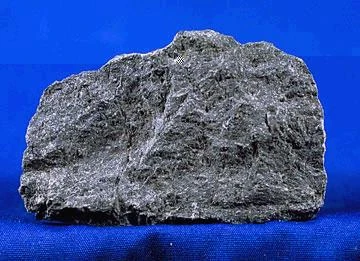
Greisen
Altered granite formed by late-stage magmatic fluids, often tin-bearing.

Greisen is a highly altered granitic rock or pegmatite, predominantly composed of quartz and micas (mostly muscovite). It forms by self-generated alteration of granite during the late-stage release of volatiles dissolved in a magma, representing a class of moderate- to high-temperature magmatic-hydrothermal alteration. Greisens are significant as they can host ore deposits of tin, tungsten, molybdenum, and other metals, and are often associated with potassic plutonic rocks emplaced at shallow crustal depths.
- type
- Altered granitic rock or pegmatite
- composition
- Quartz and micas (mostly muscovite), with variable topaz, tourmaline, cassiterite, fluorite, beryl, wolframite, siderite, molybdenite, and other sulfides
- formation_depth
- 0.5 to 5 km
- associated_rock
- Alkali feldspar granite (potassic plutonic rocks)
- ore_metals
- Tin, tungsten, molybdenum, beryllium, and locally tantalum, gold, silver, copper
- tectonic_setting
- S-type granite suites in thick arc and back-arc fold belts
Lore & Background
Greisen is formed by endogenous alteration of granite during the cooling stages of emplacement. The greisen fluids are the last highly gas- and water-rich phases of complete crystallization of granite melts, forced through interstitial spaces into veins and pools at the upper margins, where boiling and rock alteration occur. The alteration progresses through incipient greisen (addition of muscovite ± chlorite, topaz, tourmaline, fluorite, retaining original granite texture), greisenized granite (quartz-muscovite-topaz-fluorite, ± tourmaline, with some original texture retained), and massive greisen (quartz-muscovite ± topaz ± fluorite ± tourmaline, typically with no original texture preserved). Tourmaline can be ubiquitous as disseminations, concentrated or diffuse clots, or late fracture fillings.
Reader's Guide
Greisen is a key rock type in economic geology because the last fluids of granite crystallization tend to concentrate incompatible metals such as tin, tungsten, molybdenum, and beryllium, and in places other metals like tantalum, gold, silver, and copper. Greisens appear restricted to intrusions emplaced high in the crust (0.5 to 5 km depth), as hydrous fluid separation cannot occur deeper than about 5 km. The roof or upper aureole is mostly sealed by hornfelsing and silicification of overlying rocks, preventing fluid escape; fracturing of these rocks typically forms greisen veins. They are generally associated with potassic plutonic rocks (alkali feldspar granite) and are rare in less potassic rocks like granodiorite or diorite. Tectonically, greisen granites are generally associated with S-type suites in thick arc and back-arc fold belts where subducted sedimentary and felsic rock is melted. Notable examples include tin and tungsten deposits of Cornwall, the Timbarra gold mine (gold greisen deposit), and the Panasqueira Mine in Portugal.
Did You Know?
- Greisen is formed by self-generated alteration of granite during the late-stage release of volatiles dissolved in a magma.
- Greisen fluids cannot separate from granite at depths greater than about 5 kilometers.
- Greisen may host ores of tin, tungsten, molybdenum, beryllium, and locally tantalum, gold, silver, and copper.
- The roof of greisen environments is typically sealed by hornfelsing and silicification of overlying rocks.
Frequently Asked Questions
What is Greisen?
Greisen is a heavily altered form of granite or pegmatite produced when late-stage magmatic fluids rework the original rock in place. Its dominant constituents are quartz and mica, with muscovite being the most common mica variety present.
What minerals can you find in Greisen?
Beyond the defining quartz and muscovite, Greisen commonly contains topaz, tourmaline, fluorite, beryl, and cassiterite. Ore-bearing phases such as wolframite, molybdenite, siderite, and assorted sulfides also occur in many localities.
How does Greisen form?
It develops when volatiles dissolved in a cooling magma are expelled during the final stages of crystallization, chemically altering the surrounding granitic rock. This moderate- to high-temperature magmatic-hydrothermal process typically takes place at shallow crustal depths, roughly 0.5 to 5 km below the surface.
Why is Greisen economically important?
Greisen bodies are a primary host for viable deposits of tin, tungsten, and molybdenum, and can also carry beryllium, tantalum, gold, silver, and copper. This makes them a key exploration target wherever potassic granites are exposed.
In what geological setting do you typically encounter Greisen?
It is most commonly associated with S-type granite suites that develop in thickened continental crust, particularly within arc and back-arc fold belts. The parent rock is usually an alkali feldspar-rich potassic granite emplaced at relatively shallow depths.
More in Rocks And Minerals 1-24
Elsewhere in the Rocks And Minerals universe
Spotted an error? Know more?
This is a living reference — every entry is fact-audited, and reader corrections feed straight into our audit queue. Suggest an edit · See this site's audit record