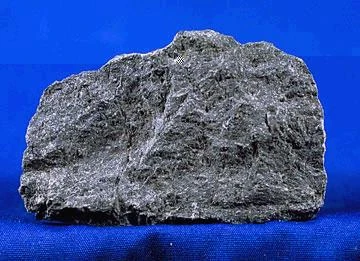
Hemimorphite
A zinc silicate mineral once confused with smithsonite as calamine.

Hemimorphite is a silicate mineral with the chemical formula Zn4(Si2O7)(OH)2·H2O, historically classified together with smithsonite as calamine. It is an important ore of zinc, containing up to 54.2% of the metal, and forms through the oxidation of sphalerite-bearing ore bodies.
- chemical_formula
- Zn4(Si2O7)(OH)2·H2O
- classification
- Silicate mineral
- zinc_content
- Up to 54.2%
- crystal_habit
- Hemimorphic (blunt at one end, sharp at the other)
- fluorescence
- Strong green in shortwave UV, weak pink in longwave UV
- associated_mineral
- Smithsonite (ZnCO3)
Lore & Background
Hemimorphite was originally believed to be the same mineral as smithsonite, both classified under the name calamine. In the second half of the 18th century, it was discovered that two different compounds were present in calamine. The silicate was the rarer of the two and was named hemimorphite because of the hemimorph development of its crystals, meaning the crystals are terminated by dissimilar faces—blunt at one end and sharp at the other.
Reader's Guide
Hemimorphite is significant as an ore of zinc, containing up to 54.2% of the metal, and as a secondary mineral formed in the oxidized upper parts of sphalerite-bearing ore bodies. Its historical confusion with smithsonite under the name calamine reflects early challenges in mineral classification. The mineral's distinctive hemimorphic crystal habit is unusual and typical of only a few minerals. Notable deposits occur in regions such as the Belgian-German border (Vieille Montagne, Aachen), the Missouri lead-zinc district, and several other localities worldwide. Its fluorescence under ultraviolet light—strong green in shortwave and weak pink in longwave—adds to its identification and collector interest.
Did You Know?
- Hemimorphite was originally classified together with smithsonite as calamine.
- Its crystals are hemimorphic, meaning they are blunt at one end and sharp at the other.
- Some specimens show strong green fluorescence in shortwave ultraviolet light and weak pink in longwave.
- It contains up to 54.2% zinc.
Frequently Asked Questions
Who is Hemimorphite?
Hemimorphite is a zinc silicate mineral (Zn4(Si2O7)(OH)2·H2O) that spent centuries grouped under the old umbrella name "calamine" alongside its cousin smithsonite. It develops when sphalerite-rich ore bodies are exposed to oxidative conditions, making it a key figure in zinc geology.
What makes Hemimorphite's crystal shape so distinctive?
Its very name describes the habit: one end of the crystal is blunt while the opposite end tapers to a sharp point, a trait mineralogists call hemimorphism. This built-in asymmetry is the mineral's most instantly recognizable visual signature.
How does Hemimorphite glow under UV light?
Shining shortwave UV on a specimen produces a vivid green fluorescence, while longwave UV coaxes out a softer pink response. This dual-fluorescence behavior is a popular field identifier for collectors trying to confirm a find.
What role does Hemimorphite play in zinc production?
It can carry as much as 54.2 % zinc by weight, ranking it among the more metal-rich zinc-bearing minerals. For much of industrial history it served as a primary ore source before newer extraction methods shifted the balance.
Why is Hemimorphite's relationship with smithsonite notable?
For generations the two species were catalogued together as a single mineral called calamine, which clouded early zinc-ore chemistry. Their eventual split into distinct species—Hemimorphite (a silicate) and smithsonite (a carbonate, ZnCO3)—cleaned up the classification and gave each its own identity.
More in Rocks And Minerals 25-29
Elsewhere in the Rocks And Minerals universe
Spotted an error? Know more?
This is a living reference — every entry is fact-audited, and reader corrections feed straight into our audit queue. Suggest an edit · See this site's audit record