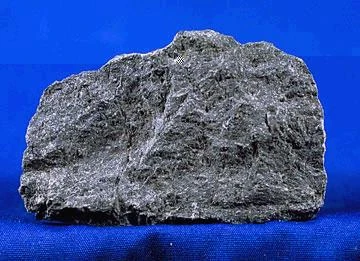
Fluorite
Mineral that gave its name to fluorescence and fluorine.

Fluorite, also known as fluorspar, is the mineral form of calcium fluoride (CaF2) and belongs to the halide minerals. It crystallizes in isometric cubic habit, though octahedral and more complex forms occur. Pure fluorite is colorless and transparent, but impurities often make it colorful, giving it ornamental and lapidary uses. Industrially, it is used as a flux for smelting, in glass and enamel production, and as a source of fluoride for hydrofluoric acid. Optically clear fluorite is valuable for apochromatic lenses and for use in far-ultraviolet and mid-infrared optics.
- category
- Mineral
- chemical_formula
- CaF2
- mohs_hardness
- 4
- crystal_system
- Isometric cubic
- primary_uses
- Flux, optics, ornamental stone, fluoride source
- notable_property
- Fluorescence (named after fluorite)
Lore & Background
The word fluorite derives from the Latin verb fluere, meaning to flow, referencing its use as a flux in iron smelting. The element fluorine also takes its name from fluorite. In archaeology and classical studies, the Latin terms murrina and myrrhina refer to fluorite; Pliny the Elder described it as a precious stone with purple and white mottling prized by Romans.
Reader's Guide
Fluorite is significant both historically and industrially. Its use as a flux in smelting dates back centuries, and its optical properties—low dispersion and high refractive index for its density—make it essential for apochromatic lenses and optics in ultraviolet and infrared ranges. The mineral's fluorescence, named after it, is a key phenomenon in physics and chemistry. Major deposits exist worldwide, with China leading production. Notable localities include Derbyshire, England (Blue John), and Asturias, Spain. The largest documented single crystal weighed approximately 16 tonnes. Fluorite's structural motif is so common it is called the fluorite structure. Its legacy includes giving names to fluorescence and fluorine, and its role in both ornamental and high-tech applications.
Did You Know?
- The largest documented single crystal of fluorite was a cube 2.12 meters in size and weighed approximately 16 tonnes.
- Pure fluorite is colorless and transparent, but impurities usually make it a colorful mineral.
- Fluorite has four perfect cleavage planes that help produce octahedral fragments.
Frequently Asked Questions
Who is Fluorite?
Fluorite is a halide mineral made of calcium fluoride (CaF2) that grows in an isometric cubic crystal system. It sits at a Mohs hardness of 4, placing it in the softer end of the mineral spectrum.
What does Fluorite look like?
A perfectly pure specimen is colorless and fully transparent, but trace impurities routinely tint it in greens, purples, blues, and other hues. This natural color range is what makes it a favorite for ornamental carving and lapidary work.
What is Fluorite's signature 'power'?
Fluorite glows under ultraviolet light, and the phenomenon is so strongly associated with the mineral that the word 'fluorescence' was coined from its name. The element fluorine likewise owes its name to Fluorite.
What practical roles does Fluorite play in industry?
It acts as a flux in metal smelting, feeds glass and enamel production, and supplies the fluoride needed to manufacture hydrofluoric acid. Optically flawless crystals are also cut into apochromatic lenses and used in far-ultraviolet and mid-infrared optical systems.
Why is Fluorite considered a key figure in mineralogy?
It is a classic textbook example of cubic habit and can grow into striking interpenetrating crystal forms. Its 19th-century discovery of fluorescence under UV light helped launch an entire branch of spectroscopic physics and chemistry.
More in Rocks And Minerals 1-24
Elsewhere in the Rocks And Minerals universe
Spotted an error? Know more?
This is a living reference — every entry is fact-audited, and reader corrections feed straight into our audit queue. Suggest an edit · See this site's audit record