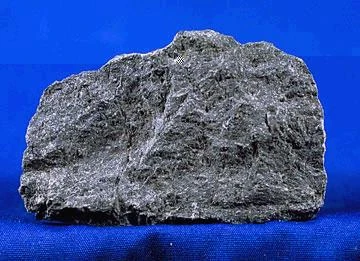
Greenockite

Greenockite, sometimes called cadmium blende or, historically, cadmium ochre, is an uncommon metal sulfide mineral. Its chemical makeup is cadmium sulfide (CdS) in crystal form. The mineral forms in the hexagonal crystal system, appearing either as massive crusts or as hemimorphic, six-sided pyramidal crystals. These crystals range in color from honey-yellow through various reds to brown. On the Mohs scale, it has a hardness of 3 to 3.5, and its specific gravity falls between 4.8 and 4.9. This mineral belongs to the wurtzite group and shares the same structure as wurtzite at high temperatures; at low temperatures, it is structurally identical to sphalerite. Greenockite is found alongside other sulfide minerals like sphalerite and galena. It is the only ore mineral for cadmium, though most cadmium is actually recovered as a byproduct from mining copper, zinc, and lead. Deposits are also known from the lead-zinc districts of the central United States. Before cadmium was recognized as toxic, greenockite was used as a yellow pigment. The cadmium extracted from it now serves many industrial purposes, including electrical nickel-cadmium (NiCd) rechargeable batteries, electroplating, high-temperature alloys, plating steel and other easily corroded metals, and in control rods for some nuclear reactors.
- type
- Mineral
- composition
- Cadmium sulfide (CdS)
- crystal_system
- Hexagonal
- mohs_hardness
- 3 to 3.5
- specific_gravity
- 4.8 to 4.9
- location_discovered
- Bishopton, Scotland
Lore & Background
Greenockite belongs to the wurtzite group and is isostructural with it at high temperatures, and is also isostructural with sphalerite at low temperatures. It occurs with other sulfide minerals such as sphalerite and galena, and is the only ore mineral of cadmium. Most cadmium is recovered as a byproduct of copper, zinc, and lead mining. It is also known from the lead-zinc districts of the central United States.
Reader's Guide
Greenockite is significant as the only ore mineral of cadmium, a metal with various industrial uses including electrical nickel-cadmium (NiCd) rechargeable batteries, electroplating, high-temperature alloys, plating steel and other metals that corrode easily, and use in control rods for some nuclear reactors. Prior to cadmium being recognized as a toxic element, greenockite was used as a yellow pigment. The mineral's rarity and its association with other sulfide ores make it a notable subject in mineralogy, though most cadmium is recovered as a byproduct of base metal mining rather than from greenockite itself.
Did You Know?
- Greenockite is the only ore mineral of cadmium.
- It is isostructural with wurtzite at high temperatures and with sphalerite at low temperatures.
Frequently Asked Questions
What is Greenockite?
Greenockite is a rare cadmium-sulfur mineral that collectors also know by the older names cadmium blende or cadmium ochre. It is classified as a metal sulfide and is not commonly encountered in the field.
What does Greenockite look like?
The mineral typically presents as thick crusts or as six-sided hemimorphic pyramidal crystals in the hexagonal system. Color runs from a warm honey-yellow through various reds up to brown.
How hard is Greenockite and how dense does it feel?
It scores between 3 and 3.5 on the Mohs scale, so a steel nail or even a copper coin can scratch it. Its specific gravity of roughly 4.8 to 4.9 gives it a surprisingly heavy, metallic heft for its size.
Where was Greenockite first discovered?
The type locality is Bishopton in Scotland, where the mineral was originally identified. It remains a scarce find in most regional and global collections.
What group does Greenockite belong to and what is its formula?
Its chemical formula is simply CdS, cadmium sulfide, and it is placed in the wurtzite group. At elevated temperatures it adopts the same crystal structure as wurtzite itself.
More in Rocks And Minerals 1-24
Elsewhere in the Rocks And Minerals universe
Spotted an error? Know more?
This is a living reference — every entry is fact-audited, and reader corrections feed straight into our audit queue. Suggest an edit · See this site's audit record