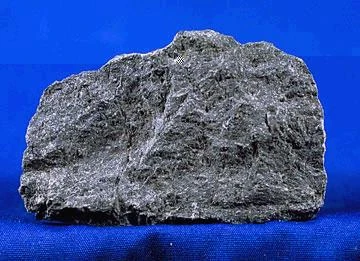
Erythrite
Secondary cobalt arsenate mineral used as a prospecting guide.

Erythrite, once called cobalt ochre and also known as red cobalt, is a secondary mineral formed from hydrated cobalt arsenate. Its chemical formula is Co₃(AsO₄)₂·8H₂O. It belongs to the monoclinic crystal system and typically appears as prismatic crystals in shades of crimson to pink. More often, it shows up as a secondary crust or coating—called cobalt bloom—on cobalt arsenide minerals. While well-formed crystals are uncommon, the mineral is usually found in crusts or small, kidney-shaped aggregates. Its name comes from the Greek word *erythros*, meaning red. Although erythrite itself has never been economically important, prospectors have used it as a guide to locate associated cobalt and native silver. Erythrite occurs as a secondary mineral in the oxidized zone of cobalt–nickel–arsenic deposits. It is found alongside minerals such as cobaltite, skutterudite, symplesite, roselite-beta, scorodite, pharmacosiderite, adamite, morenosite, retgersite, and malachite. Notable localities include Cobalt, Ontario; La Cobaltera, Chile; Schneeberg, Saxony, Germany; Joachimsthal, Czech Republic; Cornwall, England; Bou Azzer, Morocco; the Blackbird mine in Lemhi County, Idaho; the Sara Alicia mine near Alamos, Sonora, Mexico; Mt. Cobalt in Queensland; and the Dome Rock copper mine in Mingary, South Australia. Other varieties include annabergite, a nickel-rich form that appears as a light green nickel bloom on nickel arsenides. Iron, magnesium, and zinc can also substitute for cobalt, yielding parasymplesite (iron), hörnesite (magnesium), and köttigite (zinc).
- formula
- Co3(AsO4)2•8H2O
- crystal_system
- monoclinic
- color
- crimson to pink
- type_locality
- Grube Daniel, Schneeberg, Saxony
- name_origin
- Greek έρυθρος (erythros), meaning red
Lore & Background
Historically, erythrite itself has not been an economically important mineral, but the prospector may use it as a guide to associated cobalt and native silver. It occurs as a secondary mineral in the oxide zone of Co–Ni–As bearing mineral deposits, in association with cobaltite, skutterudite, symplesite, roselite-beta, scorodite, pharmacosiderite, adamite, morenosite, retgersite, and malachite.
Reader's Guide
Erythrite forms a complete series with annabergite, chemical formula Ni3(AsO4)2•8H2O, with the general formula (Co,Ni)3(AsO4)2•8H2O. The nickel variety, annabergite, occurs as a light green nickel bloom on nickel arsenides. Iron, magnesium, and zinc can also substitute for the cobalt position, creating three other minerals: parasymplesite (Fe), hörnesite (Mg), and köttigite (Zn). Notable localities include Cobalt, Ontario; La Cobaltera, Chile; Schneeberg, Saxony, Germany; Joachimsthal, Czech Republic; Cornwall, England; Bou Azzer, Morocco; the Blackbird mine, Lemhi County, Idaho; Sara Alicia mine, near Alamos, Sonora, Mexico; Mt. Cobalt, Queensland; and the Dome Rock copper mine, Mingary, South Australia. Its significance lies primarily as a visual indicator for prospectors seeking cobalt and silver deposits.
Did You Know?
- Erythrite is also known as red cobalt and previously cobalt ochre.
- It forms a complete series with annabergite, the nickel analog.
- Well-formed crystals are rare; most erythrite occurs as crusts or reniform aggregates.
- The name derives from the Greek word for red, έρυθρος (erythros).
Frequently Asked Questions
Who is Erythrite?
Erythrite is a secondary mineral made of hydrated cobalt arsenate, with the formula Co₃(AsO₄)₂·8H₂O. It crystallizes in the monoclinic system and shows up in shades from crimson to pink.
What role does Erythrite play in the field?
It acts as a prospecting guide, signaling the presence of cobalt-bearing deposits to geologists. Rather than growing as large crystals, it most often appears as a thin secondary crust or coating—called cobalt bloom—on cobalt arsenide minerals.
Where does Erythrite's story begin?
Its type locality is the Grube Daniel mine at Schneeberg in Saxony, Germany. The name comes from the Greek word erythros, meaning red, a direct reference to its signature crimson-to-pink hue.
Why is Erythrite important to collectors and geologists?
Well-formed prismatic crystals are genuinely rare, so intact specimens are highly sought after by mineral collectors. In the field, even its common kidney-shaped aggregates or crusty coatings provide a reliable visual clue that cobalt mineralization is present.
How does Erythrite differ from primary cobalt minerals?
It is strictly a secondary product, forming when cobalt arsenate becomes hydrated rather than crystallizing directly from a magmatic or hydrothermal fluid. It has also gone by the older names cobalt ochre and red cobalt, which can cause confusion with other cobalt-bearing species.
More in Rocks And Minerals 1-24
Elsewhere in the Rocks And Minerals universe
Spotted an error? Know more?
This is a living reference — every entry is fact-audited, and reader corrections feed straight into our audit queue. Suggest an edit · See this site's audit record