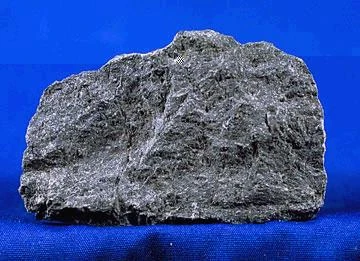
Fluorapatite
Most common phosphate mineral, used in teeth and fluorescent lighting.

Fluorapatite, also spelled fluoroapatite, is a phosphate mineral with the formula Ca5(PO4)3F (calcium fluorophosphate). It is a hard crystalline solid that crystallizes in a hexagonal crystal system and is the most common phosphate mineral, occurring widely as an accessory mineral in igneous rocks, calcium-rich metamorphic rocks, and as a component of phosphorite ore deposits. Its significance lies in its roles as an industrial source of phosphoric and hydrofluoric acids, a component of tooth enamel that helps prevent dental caries, and a key material in the development of fluorescent tube phosphors.
- formula
- Ca5(PO4)3F
- crystal_system
- hexagonal
- color_pure
- colorless
- common_colors
- green, brown, blue, yellow, violet, colorless
- mineral_class
- phosphate
- primary_industrial_use
- source of phosphoric and hydrofluoric acids
- biological_role
- component of tooth enamel
Lore & Background
Fluorapatite is found in the teeth of sharks and other fishes in varying concentrations, and is also present in human teeth that have been exposed to fluoride ions through water fluoridation or fluoride-containing toothpaste. The presence of fluorapatite helps prevent tooth decay or dental caries, and it has a mild bacteriostatic property that decreases the proliferation of Streptococcus mutans, the predominant bacterium related to dental caries. Along with hydroxylapatite, it can be a component of tooth enamel, especially in individuals who use fluoridated toothpaste.
Reader's Guide
Fluorapatite's significance spans multiple fields. Industrially, it is an important source of both phosphoric and hydrofluoric acids; as a naturally occurring impurity in apatite, it generates hydrogen fluoride as a byproduct during phosphoric acid production, which is now one of the industrial sources of hydrofluoric acid. Fluorapatite can also be reduced by carbon in the presence of quartz to produce white phosphorus, and it is used as a gemstone. Its presence in human teeth from fluoride exposure helps prevent dental caries, making it relevant to public health.
Did You Know?
- Fluorapatite is the most common phosphate mineral.
- It is found in the teeth of sharks and other fishes in varying concentrations.
- Synthetic fluorapatite doped with manganese and antimony was used in halophosphors for fluorescent tubes.
- The presence of fluorapatite in human teeth helps prevent tooth decay and has a mild bacteriostatic property against Streptococcus mutans.
Frequently Asked Questions
Who is Fluorapatite?
Fluorapatite is a phosphate mineral whose chemical identity is calcium fluorophosphate, written as Ca5(PO4)3F. It forms hard, hexagonal crystals and holds the title of the most abundant phosphate mineral found in nature.
What are Fluorapatite's powers/role?
Industrially, it is the go-to raw feedstock for manufacturing both phosphoric acid and hydrofluoric acid. Biologically, it is a fundamental building block of tooth enamel, where it helps shield teeth from cavity-forming bacteria.
Where does Fluorapatite appear in the 'story' of rocks?
It regularly shows up as a minor accessory mineral in igneous rocks and in calcium-rich metamorphic rocks. It also makes up the main body of phosphorite ore deposits, so geologists encounter it across a wide variety of rock settings.
Why is Fluorapatite important?
Its dual utility in acid production and dental health makes it far more than a curiosity in a rock collection. It was also a critical material in the early development of fluorescent tube phosphors, linking it to modern lighting technology.
What does Fluorapatite look like?
Pure crystals are colorless, but trace impurities frequently tint them green, brown, blue, yellow, or violet. In hand specimen it typically presents as a hard, prismatic hexagonal crystal.
More in Rocks And Minerals 1-24
Elsewhere in the Rocks And Minerals universe
Spotted an error? Know more?
This is a living reference — every entry is fact-audited, and reader corrections feed straight into our audit queue. Suggest an edit · See this site's audit record